
Flood Damage Restoration
Flood Damage Restoration for homes and businesses: what it covers, how it works, what it costs and how to book it by phone.
- Calls answered 24/7
- Written estimate before work starts
- Water removal, drying and repair
- Homes and businesses
What happens when you call
Call (833) 728-2327
Tell the person who answers what got wet and where the water came from. Calls are answered 24/7.
Stop the source
You get help shutting off the water or the power to a wet room while the crew is on the way.
Inspection and written estimate
Moisture readings, photos and a written estimate come before any work begins.
Flood Damage Restoration is one of the water damage services 911 Water Damage Fix books in every city it lists.
Calls are answered 24/7 at (833) 728-2327.
Flood Damage Restoration in short
Flood damage restoration, also called flood cleanup, is water removal, tear-out, cleaning and drying after water comes in from outside: a storm, a rising creek, a failed sump pump or groundwater through a basement wall. Outside floodwater is Category 3 under the IICRC S500 standard, so carpet, pad and wet drywall below the water line are removed, and the area is disinfected before drying.
What is part of flood damage restoration
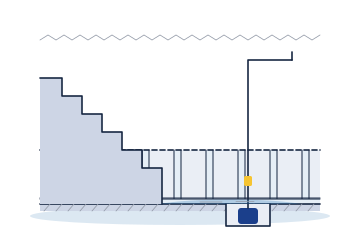
Flood damage restoration handles water that came in from outside the building: storm runoff, a rising creek or river, groundwater through a basement wall, or a sump pump that failed during heavy rain.
Outside floodwater is treated as Category 3 water under the IICRC S500 standard because it carries soil, chemicals and bacteria. Porous materials it touched, such as carpet, pad, insulation and drywall below the water line, are removed rather than dried, and hard surfaces are cleaned and disinfected.
The S500 Consensus Body noted in February 2026 that wind-driven rain and roof leaks are not automatically Category 3; the restorer decides from site conditions. That decision changes the scope and the price, so ask how the category was set.
- Pumping out flooded basements and crawl spaces
- Removing mud and debris
- Tear-out of drywall, insulation, carpet and pad below the water line
- Cleaning and disinfecting hard surfaces
- Structural drying and moisture readings
- Documentation for a flood insurance claim
Jobs inside flood damage restoration
Flooded basement cleanup
Pump-out, mud removal, tear-out below the water line, disinfection and drying of basement walls and floors.
Storm water cleanup
Water from heavy rain that came in at doors, window wells or low points is extracted and the area dried.
Crawl space water removal
Standing water under the house is pumped out and the crawl space dried so moisture does not move into the floor above.
Sump pump failure cleanup
After a power outage or pump failure, the basement is pumped out, cleaned and dried, and the pump problem is noted for repair.
Flood damage restoration: the steps
Safety check
Power to the flooded area is confirmed off before anyone steps into the water.
Pump out
Submersible pumps remove standing water, and mud and debris are cleared.
Tear out
Carpet, pad, insulation and drywall below the water line are removed and bagged.
Disinfect and dry
Hard surfaces are cleaned and disinfected, then air movers and dehumidifiers dry the structure.
When to call for flood damage restoration
- Water coming in through basement walls or the floor after rain
- A sump pump that failed or could not keep up
- A water line left on walls after floodwater drained
- Mud or debris left on floors
- A musty smell in a basement after a storm
Before you call
- Stay out of floodwater until the power to that area is off.
- Photograph the water line on walls before cleanup starts.
- Call your flood insurer if you have a flood policy.
- Keep children and pets away from the water.
Typical prices for flood damage restoration
Typical ranges from published cost guides, not quotes. The written estimate after an inspection is the price that applies.
| Item | Typical range | Unit |
|---|---|---|
| Floodwater cleanup and drying (outside water is Category 3) | $7 to $12 | per sq ft |
| Flooded basement cleanup, 500 to 1,000 sq ft | $2,000 to $8,000 | per job |
| Basement water removal, drying and sanitizing | $4 to $12 | per sq ft |
Typical US ranges compiled on 17 October 2026 from public cost guides and price lists, not prices from 911 Water Damage Fix or any one company. Most guide figures trace back to Angi and HomeAdvisor customer surveys (HomeAdvisor water damage cost guide, updated June 17, 2026); independent checks: HomeGuide (2025 and 2026), Fixr (January 2025), a State of Iowa restoration contract price list effective May 22, 2026, and a published restoration equipment rental list. The written estimate after an inspection is the only price that applies.
What drives the price
- Depth of the water and the area of the basement or floor.
- Mud and debris removal.
- How much drywall, insulation and flooring sat below the water line.
- Disinfection of Category 3 water.
- Drying days.
Insurance and who pays
Flooding from outside is excluded from standard homeowners and renters policies. It needs a separate flood policy from the National Flood Insurance Program or a private insurer, and FEMA notes a 30-day waiting period before a new NFIP policy takes effect.
A standard homeowners policy usually lists sudden, accidental discharge of water from plumbing, heating, air conditioning or appliances as a covered peril, according to the Insurance Information Institute (Triple-I). Damage from a slow leak or poor upkeep is usually excluded, and so is mold.
Whoever pays, the insurer will want proof: photos before anything is moved, moisture readings, a list of damaged items and the written estimate. Restoration companies document all of this as part of the job, and you deal with your own insurer about the claim.
Flood damage restoration questions
How much does water damage restoration cost?
What should I do right after water damage?
What is the difference between water mitigation and water restoration?
How long does it take to dry out water damage?
Does homeowners insurance cover water damage?
Will mold grow after water damage?
What are the categories of water damage?
How do I choose a water damage restoration company?
Other water damage services
-
Floor Water Damage Repair
Cupped hardwood, swollen laminate and wet subfloors dried, then repaired or replaced. Read floor water damage repair, step by step.
Call for Floor Water Damage Repair -
Wet Carpet Drying
Water pulled out of carpet and pad, then dried in place or replaced, by water category. More on wet carpet drying.
Call for Wet Carpet Drying -
Ceiling Water Damage Repair
Stained, sagging or wet ceilings dried, cut out, patched and painted after the leak is fixed. More on how ceiling water damage repair works.
Call for Ceiling Water Damage Repair -
Commercial Water Damage Restoration
Extraction, drying and repair for offices, stores, restaurants and rental units. Details: the commercial water damage restoration process.
Call for Commercial Water Damage Restoration -
Water Removal and Extraction
Standing water pumped out of floors, carpet and basements, the first step on any water job. Details: how water removal works.
Call for Water Removal & Extraction -
Water Mitigation and Drying
Air movers, dehumidifiers and daily moisture readings until walls, floors and framing are dry. More on how water mitigation works.
Call for Water Mitigation & Drying -
Water Damage Repair
Drywall, ceilings, floors, trim and paint put back once the structure tests dry. Details: how water damage repair works.
Call for Water Damage Repair -
Sewage Cleanup
Sewer backups and toilet overflows contained, removed, disinfected and dried. More on how sewage cleanup works.
Call for Sewage Cleanup -
Burst Pipe Water Damage Cleanup
Water from a split supply line or water heater extracted and dried, room by room. Details: how burst pipe cleanup works.
Call for Burst Pipe Cleanup
Calls answered 24/7 in your home
Calls answered 24/7. The estimate is in writing before work begins.