
How often floodwater reaches Naples homes
For Naples, FL: the facts behind the questions callers ask most, in plain words.
About 47% of the homes in Naples date from before 1980, against 17% across Collier County.
- Calls answered 24/7
- Written estimate before work starts
- Water removal, drying and repair
Your call, step by step
Call (833) 728-2327
Tell the person who answers what got wet and where the water came from. Calls are answered 24/7.
Stop the source
You get help shutting off the water or the power to a wet room while the crew is on the way.
Inspection and written estimate
Moisture readings, photos and a written estimate come before any work begins.
A guide for water damage restoration in Naples and the towns around it.
Building payments on flood claims in Naples's ZIP codes averaged $65,987 in the ten years to 2025.
Flood risk in Naples, in short
Storm and flood figures for Naples sit well above Florida's. FEMA's National Risk Index puts yearly hurricane loss at $215 per $100,000 of building value, against 107 statewide. Inland flood loss is $155, against 73 for the state, and coastal flood loss is $6. Heavy rain of an inch or more comes on 16 days a year in NOAA's climate normals.
FEMA flood insurance records show 38.6 claims per 1,000 homes from 2016 to 2025. Collier County ran higher at 54.1, and Florida as a whole was 19.8. The average building payment in Naples was $65,987, against $113,871 countywide. Collier County has had 19 major disaster declarations for floods and storms since 2000. Its storm reports note flooding on 25 days from 2016 to 2025.
Outside water in Naples is Category 3. It carries salt, silt and sewage, so the restoration crew removes wet drywall, insulation and flooring rather than drying them. FEMA's records show 29.5% of Collier County homes with federal flood insurance, against 13.7% across the state. With 40% of Naples homes kept for seasonal use, storm water can sit for days before an owner returns. Before the next storm, ask your insurer what your policy covers.
Flood and weather figures for Naples
About 19,421 people live in Naples; calls for its area come from 28 ZIP codes.
By FEMA's estimate, inland flooding costs homes and businesses in Naples's ZIP codes about $155 a year per $100,000 of building value.
60% of homes in Naples share a building with at least four other units, against 36% across Collier County. In a shared building, let the manager and the neighbors below know about a leak.
From 2016 to 2025 there were 38.6 federal flood insurance claims for every 1,000 homes in Naples's ZIP codes.
- 47% Homes built before 1980Collier County: 17%
- 155 Yearly inland flood loss per $100,000 of building valueCollier County: 131
- 60% Homes in buildings with 5 or more unitsCollier County: 36%
- 38.6 Flood insurance claims per 1,000 homes, 2016 to 2025Collier County: 54.1
- 18,720 Housing units
- 40% Homes kept for seasonal or occasional useCollier County: 26%
- 19,421 Residents
- 17% Homes that are rentedCollier County: 24%
- 1% Mobile and manufactured homesCollier County: 5%
Sources: U.S. Census Bureau, American Community Survey 2019-2023 5-year estimates; FEMA OpenFEMA, FIMA NFIP Redacted Claims v3, claims from 2016 to 2025 (not endorsed by FEMA); FEMA OpenFEMA, NFIP Residential Penetration Rates v1 (not endorsed by FEMA); FEMA National Risk Index v1.20, December 2025 (not endorsed by FEMA); NOAA NCEI, U.S. Climate Normals 1991-2020, nearest weather station; FEMA OpenFEMA, Disaster Declarations Summaries v2 (not endorsed by FEMA); NOAA NCEI Storm Events Database, 2016 to 2025.
Lowering the risk in Naples
Naples carries a yearly hurricane loss of $215 per $100,000 of building value on FEMA's National Risk Index, and 40% of its homes are kept for seasonal use. Preparing here often means preparing a home you will not be in when the storm arrives. Before the season, clear out the downspouts and extend them away from the slab, and regrade any bed or walkway that tips water toward the walls.
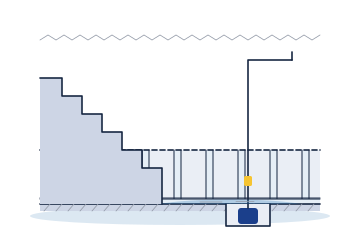
If the home has a sump pump or a low garage drain, test it with a bucket of water and add battery backup for outages. Move papers, photos and electronics to high shelves before you leave for the summer, and shut the main water valve while the home sits empty, since a failed supply line in an empty unit can run for weeks. With 60% of homes in buildings with 5 or more units, tell the association manager when you leave and who holds a key, so someone can check the unit after a storm. Check your address on the FEMA flood map, and call your insurance company to ask what your policy covers.
When water gets in, switch off power to wet rooms if it is safe, and call. Storm water is Category 3, so the restoration crew removes soaked drywall, insulation and pad before drying. Water removal in Bonita Springs follows the same steps. In stacked condos a leak often travels down from the unit above, so sewage cleanup and drying may reach two homes at once. 911 Water Damage Fix answers 24/7, including for owners calling from out of state.
Records to keep before a flood
A few records make the days after a flood easier. Know your flood zone from the FEMA Flood Map Service Center. Keep a video walk-through of the house, room by room, stored online. Write down where the main water valve and the breaker panel are. Raise anything valuable off the basement floor, and keep sandbags or water barriers only where water actually enters. After a flood, photograph the water line on the walls before cleanup begins. Hardwood or laminate soaked by floodwater usually needs floor repair after water damage once it is dry.
What Naples callers ask about floods
What does a FEMA flood risk rating mean for my Naples home?
How do I keep storm water out of a Naples basement?
Is flood cleanup different from other water damage?
What should I do after floodwater gets into my Naples home?
Where can I check the flood zone for a Naples address?
Related Naples guides
guide to water damage costs for Naples
What water damage restoration costs around Naples, what moves the price and what the estimate should list.
first steps guide for Naples
A step-by-step first hour for Naples homes with water damage.
the Naples burst pipe guide
Burst and frozen pipes in Naples: causes, first steps and costs.
Calls answered 24/7 around Naples
Answered 24/7, with a written estimate before any work starts.